
Home › HVAC Business Insurance Guides › HVAC Workers' Comp
HVAC workers' comp: class codes, audits and 1099 techs
In most states, HVAC field payroll goes in workers' comp class code 5537, and your rate is set per $100 of that payroll. Surprise audit bills rarely come from the code itself. They come from payroll the auditor finds that you didn't report: 1099 techs, subs with no certificate, and office or sales staff with no records to back up a cheaper class.
Key takeaways
- 5537 is the usual HVAC code. In states that use NCCI rules, HVAC and refrigeration work goes in class 5537, and the code already includes your shop, yard and drivers.
- Only a few jobs split out. Office staff (8810) and outside salespeople (8742) can sit in cheaper classes, but each one has strict conditions an auditor will test.
- The audit trues up the deposit. Your premium starts as an estimate. After the policy year, the carrier counts real payroll by class and bills or refunds the difference.
- 1099 techs and uninsured subs drive most surprise bills. A sub with no comp certificate can be counted as your payroll, up to the full price you paid under NCCI-style rules.
- Records decide the outcome. Hours by class, overtime shown separately and current sub certificates are what keep the bill close to the estimate.
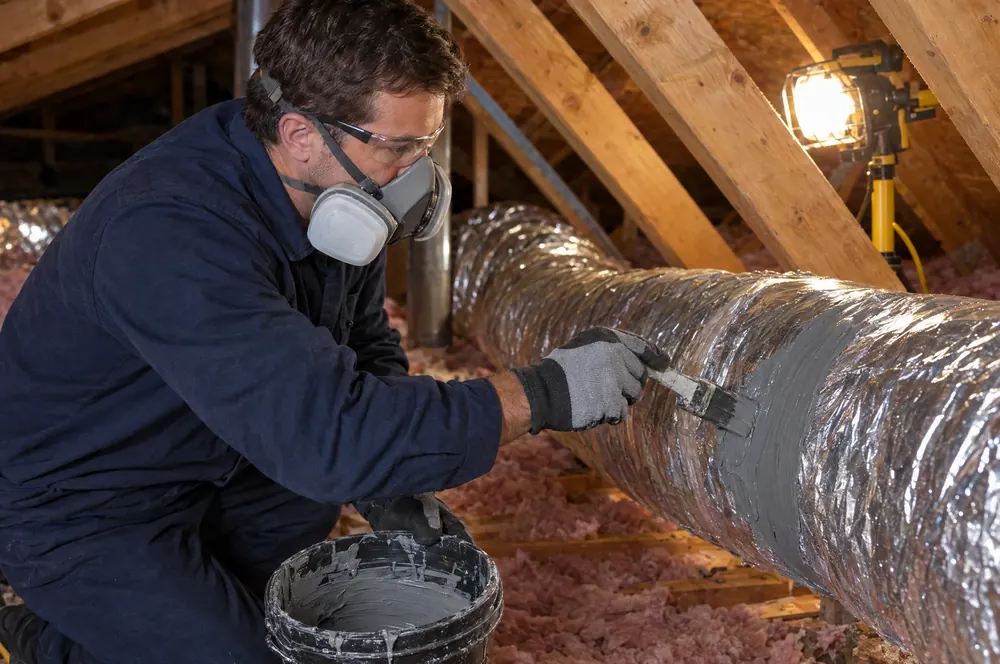
What HVAC workers' comp class code 5537 covers
Class code 5537 is the workers' comp classification for HVAC contractors in most NCCI states. Its official title is "Heating, Ventilation, Air-Conditioning and Refrigeration Systems Installation, Service and Repair, Shop, Yard & Drivers."
That title does a lot of work. A furnace change-out, a mini-split install, a no-heat call and a walk-in cooler repair all land in the same class. The words "Shop, Yard & Drivers" matter too. Under NCCI rules, when a class title names drivers with "&", those workers can't be moved to a separate drivers class.
So the tech who runs parts in the van and the helper who stages equipment in the yard usually rate at 5537, the same as your installers.
NCCI calls this your governing classification: the basic class that carries the most payroll in your business. It also decides where some mixed jobs go, such as a yard manager who is out among the equipment.
The class codes that sit beside 5537
A handful of other codes show up on HVAC comp policies. Each has rules, and the auditor checks them against what people actually do.
8810 clerical office employees
Code 8810 is for office work only: records, phones, data entry and other desk tasks. The work area has to be kept apart from the shop, yard or job site by a wall, floor, counter or other barrier.
A dispatcher who also loads parts onto the vans in the warehouse may not qualify.
8742 outside salespeople
Code 8742 is for staff who sell away from your premises. Watch this one with comfort advisors. NCCI's rule says 8742 does not apply to employees who take job site measurements or do inspections to prepare bids for a construction contractor.
A salesperson who runs load calcs in an attic and measures return ducts before quoting a system may end up back in 5537 at audit. Ask your carrier how they treat that job before you set the estimate.
5183 plumbing, 5535 sheet metal and 5606 supervisors
- 5183, Plumbing NOC & Drivers. A combined plumbing and HVAC shop can carry 5183 for its plumbing work. Construction businesses may have more than one basic class, but an employee's pay is split between classes only when your payroll records show the actual hours in each.
- 5535, Sheet Metal Work, Installation & Drivers. This is a separate trade class in NCCI states. Ductwork your own crews run as part of your HVAC jobs is usually handled under your HVAC code, but a sheet metal crew working as its own line of business may be classed apart. Your carrier decides from the facts.
- 5606, construction executives and superintendents. This class is for people who manage jobs and don't do the hands-on work. It has strict conditions, so check with your carrier before you put anyone in it.
Shops that fabricate their own ductwork may find a separate sheet metal code applies to that payroll, and the code differs between rating bureaus, which is one reason crosswalks between states get confusing.
How a class code rate becomes your comp premium
Comp is priced per $100 of payroll. The math starts as payroll ÷ 100 × the class rate, and then your experience mod adjusts the result.
To show how far apart the codes are, here are Indiana's advisory rates approved for January 1, 2026. They're one state's numbers, not a national average.
| Class code | Indiana advisory rate per $100 payroll, approved for Jan. 1, 2026 |
|---|---|
| 5535 Sheet metal work, installation | $2.506 |
| 5537 HVAC install, service and repair | $1.236 |
| 5183 Plumbing | $0.924 |
| 5606 Construction executive or superintendent | $0.388 |
| 8742 Outside salespersons | $0.110 |
| 8810 Clerical office | $0.073 |
Example scenario: An Indiana shop has an office manager earning $50,000. In 8810, her share of the base premium is about $37 (500 × $0.073). If she's rated as a field tech in 5537, it's about $618 (500 × $1.236). That gap is real money, and it only holds if her job and her desk meet the 8810 rules. Indiana's approved 2027 rates, for policies starting January 1, 2027 or later, are $1.247 for 5537 and $0.067 for 8810, so the gap barely moves.
Carriers apply their own filed rates plus credits and fees on top of the bureau numbers. What you pay depends on your payroll by class code, your annual revenue, your mix of installation and service work, residential versus commercial jobs, the vans you run, your claims history and the limits you pick.
How your experience mod moves the price
Your experience mod compares your own claims to those of similar employers. A mod of 1.00 is the baseline. Below 1.00 is a credit, and above 1.00 is a debit that raises your premium.
NCCI usually looks at the latest three years of payroll and losses, and it leaves out the policy year that just ended because its losses haven't been valued and reported to NCCI yet. So one bad year can follow you for three renewals.
The formula weighs how often claims happen more heavily than how big they are. A run of small cuts, back strains and falls from ladders can push your mod up faster than one large claim.
You only get a mod once your premium reaches your state's threshold. Smaller shops sit at 1.00 until then.
States where the HVAC class code works differently
Not every state follows NCCI's manual. Eight states we're licensed in have their own rating bureaus: Pennsylvania, New York, New Jersey, California, Michigan, Minnesota, North Carolina and Indiana.
Some of them use NCCI-style numbers with their own rules. Others use different codes entirely.
- Pennsylvania uses code 0664, Heating, Ventilating or Air Conditioning Contractor, for forced-air work. Hot-water heating equipment goes to plumbing code 0663 instead, and duct fabrication in a shop is rated separately. See our Pennsylvania HVAC insurance page.
- Ohio is a monopolistic state. Comp there comes from the state fund, the Ohio Bureau of Workers' Compensation, unless a large employer qualifies to self-insure, and private carriers can't sell it. The state policy leaves out employer's liability, so many Ohio shops add stop-gap coverage, usually on their general liability. More on our Ohio page.
- Texas makes comp optional for most private employers. Shops that opt out lose some legal defenses if an employee sues, so talk to a Texas employment attorney first. See the Texas HVAC insurance page.
If you work across state lines, ask how each state classes your crews before the policy starts.
How a workers' comp audit works
The premium on your policy is a deposit based on the payroll you estimated. After the policy year ends, the carrier audits your real payroll by class code and sends a bill or a refund for the difference.
Most businesses get an audit each year, whether or not anyone filed a claim. It may be a mailed form, a phone call or an auditor at your office.
For construction businesses, NCCI rules let the carrier add or apply classes at audit. If the auditor finds work your policy didn't list, that payroll can be rated in the right class and billed after the fact.
Common reasons an HVAC audit comes back with a bill:
- You hired two techs in March for cooling season and never updated the estimate.
- Field payroll was reported as office payroll, with no hours to prove the split.
- 1099 workers or subs had no certificate of comp for the dates they worked.
- Overtime was lumped in with regular pay instead of shown separately.
Why 1099 techs and uninsured subs lead to audit bills
The records that prevent a surprise audit bill
Most audit bills shrink or go away when your records answer the auditor's questions before they're asked. Keep these on file all year:
- Payroll by employee and by class. Show actual hours in each class for anyone who splits time. NCCI rules don't allow estimates or percentages; without records, the whole wage goes to the highest-rated class that person worked in.
- Overtime shown separately. The extra pay for overtime can be left out of comp payroll when your books show it by employee. Shift pay for nights or weekends doesn't count as overtime.
- A comp certificate from every sub, before they start. Make sure the dates cover the whole job. Our guide to certificates of insurance for HVAC contractors explains what to look for.
- A list of every 1099 payee. Note what each one did, the contract amount and whether the price was labor only or labor and materials.
- Job descriptions for office and sales staff. Write down where each person works and whether they ever measure or inspect a job site.
- Officer and owner payroll. Many states apply minimum and maximum payroll amounts for executive officers, so keep their pay records apart.
Update your estimate mid-year when you add a tech or open a second location. A smaller bill spread across the year beats one big one in January.
Can HVAC business owners be included or excluded?
Usually yes, but the rules depend on your state and on how your business is set up. As a general pattern, sole proprietors and partners are often left off unless they choose coverage, and corporate officers are often included unless they file to opt out. Your state's statute decides.
Florida is a good example of how strict construction rules can get. There, a corporation or LLC in construction can exempt three officers at most. Each exempt officer has to hold a stake of 10% or more, and the state charges a $50 fee to apply.
See our Florida HVAC insurance page for more.
California goes further for HVAC. A C-20 license holder can't use the no-employees exemption, so even a one-person shop keeps a comp certificate on file with the license board.
Our California page has the details.
Excluding yourself lowers the premium, but it also means your own injury on a rooftop unit likely wouldn't be paid by the comp policy. Many owners who still climb ladders keep themselves on. Talk with your agent and your CPA before you decide.
Getting your HVAC workers' comp class code right at renewal
Before each renewal, compare your class codes to what your people did last year. Look hard at three things: anyone in 8810 who goes into the field, anyone in 8742 who measures jobs, and every 1099 payee without a certificate.
Then send your agent a payroll estimate by class for the coming year, not last year's number. A licensed agent on our team can review your codes, explain how your state handles them and shop your HVAC workers' comp with carriers that write HVAC in your state. If you're just opening a shop, our guide to starting an HVAC business covers when comp kicks in, and our HVAC insurance cost guide shows how comp fits next to your other policies.
Start your quote when you're ready.
Frequently asked questions
What is the workers' comp class code for HVAC?
Do I need workers' comp for 1099 HVAC techs?
Why did my workers' comp audit come back with a bill?
Can my comfort advisor be classed as outside sales?
How long does a high experience mod last?
Can I exclude myself from workers' comp as the owner?
Want a second set of eyes on your coverage?
Independent agents, 12+ A-rated carriers, and a licensed agent back to you within one business day.