
Home › Coverages › Residential HVAC Contractor Insurance
Insurance for residential HVAC service and replacement
Residential HVAC contractor insurance protects a service and replacement company whose work happens in kitchens, basements, attics and bedrooms, where families live with the equipment you leave behind. Most shops need general liability with solid completed-operations coverage, workers' comp, commercial auto and tools coverage, then add pollution, cyber and an installation floater as the business grows.
- Since 2003
- 12+ A-rated carriers
- 28 states
- Independent agents
Start your HVAC insurance quote
Takes about two minutes. A licensed agent follows up.
Licensed in 28 states · NPN 7642818 · Since 2003
Where residential HVAC contractor insurance gets tested
Residential work goes wrong in the places people sleep, cook and store what they care about. The jobs are smaller than commercial work, but there are far more of them, and each one leaves a combustion appliance, a refrigerant circuit or a drain line running in an occupied home.
The trouble usually comes from a short list:
- Finished work that fails later. A furnace, boiler, water heater or heat pump you installed in the fall becomes the subject of a claim in the spring. That's completed operations, and residential replacement shops build up more of it every month.
- Water. Condensate pumps unplugged during a service visit, a secondary pan left out of a closet install, a line set that sweats inside a wall. Water finds the hardwood.
- People in the house. Kids, grandparents and pets share the space with your ladders, hoses and open panels.
- Trust. Your techs are alone in homes with jewelry on the dresser and a garage code in hand. An accusation can cost you even when nobody took anything.
- Paper and data. Financing applications, card numbers on file for maintenance plans and door codes in your dispatch software.
- The season. No-heat and no-cool calls stack up, you hire fast, and new techs run late calls with less supervision.
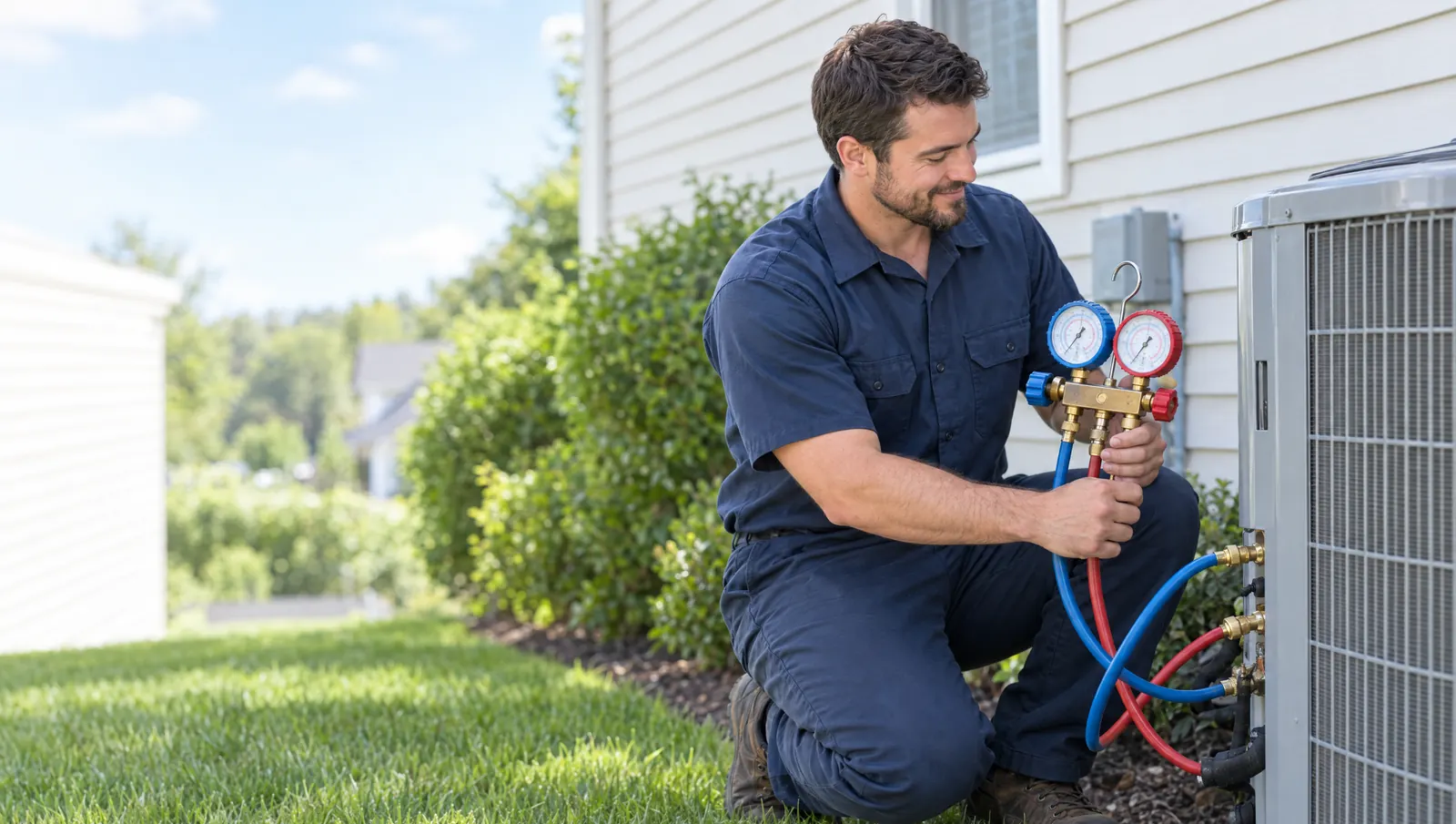
The coverage stack for a residential HVAC company
Start with the four must-haves, then add the rest as your work and your contracts demand it.
General liability (must-have)
Injury and damage to customers and their homes, including work that fails after you've left. Check the completed-operations aggregate and the pollution endorsements. HVAC general liability
Workers' comp (must-have once you hire)
Ladder falls, attic heat and backs strained hauling furnaces down basement stairs. Workers' comp for HVAC
Commercial auto (must-have)
Service vans, take-home vans and techs who drive their own cars to the supply house. Commercial auto for HVAC vans
Tools and equipment (must-have)
Gauges, recovery machines and analyzers stolen from a van parked in a tech's driveway overnight. HVAC tools coverage
Installation floater (often needed)
A residential change-out rarely has a builder's risk policy behind it, so the new equipment between pickup and acceptance is often yours to insure. Installation floater
Pollution liability (often needed)
Mold from condensation and disturbed insulation in older homes, which general liability endorsements often remove. Contractors pollution liability
Umbrella and cyber (as you grow)
An umbrella adds limits when a builder or property manager asks for more than your GL carries. Cyber covers the customer data your office collects.
What homeowners, landlords and builders will ask you for
Most homeowners never ask for your insurance. The ones who do, along with landlords and builders, want specific things.
Homeowners. In some states the license spells out what you owe them. Texas requires licensed air conditioning and refrigeration contractors to give any customer who asks the insurer's name, the policy number and the agent's name, address and phone number. See HVAC contractor insurance in Texas.
Landlords and property managers. Rental work comes with deadlines written into state law. Ohio's landlord-tenant statute requires landlords to supply reasonable heat at all times and keep HVAC fixtures in good, safe working order, so property managers push winter repairs hard. New Jersey's multiple-dwelling rules require 68°F from 6 a.m. to 11 p.m. and 65°F overnight from October 1 to May 15. Arizona requires landlords to provide reasonable cooling where units are installed. Expect a certificate request, often with the manager named as additional insured, before your first work order. See HVAC contractor insurance in Ohio.
Builders. Production and custom builders send a subcontract with an insurance exhibit: limits, additional insured status for ongoing and completed work, and often a waiver of subrogation. A certificate alone doesn't create any of that; the endorsement does. Our certificate of insurance guide explains each request.
Growing a residential HVAC company without outgrowing your coverage
Each growth step in a residential shop changes a line on your policies. Plan the change before the step, not at renewal.
- Building a maintenance-plan base. Recurring revenue is great until the contract promises more than you can deliver. Review the agreement wording every time you change the plan.
- Adding comfort advisors. Outside salespeople who don't do installs are often rated in their own workers' comp class (8742 in NCCI-style lists), well below the 5537 tech rate. Your carrier and the rating bureau decide the class, and the payroll split has to hold up at audit. Our comp class code and audit guide shows the math.
- Hiring for the season. Your comp premium starts as a deposit on estimated payroll. Ten summer helpers you didn't put in the estimate show up on the audit bill.
- Putting more vans in driveways. List every driver of a take-home van and tell us about personal use and overnight parking, because those facts shape the auto rating.
- Adding propane work. Heating classes for general liability separate work that excludes propane from work that includes it, and one published small-business program accepts only the no-propane class. Expect underwriters to ask, and a package policy may stop fitting.
- Adding plumbing or water heaters. Combined plumbing and HVAC shops can split between comp classes; how that split works is a carrier and bureau call.
What you pay depends on your payroll by class code, your annual revenue, your mix of installation and service work, residential versus commercial jobs, the vans you run, your claims history and the limits you pick. Get a quote for your HVAC business →
Residential HVAC insurance questions
What insurance do I need to run an HVAC service company?
Am I covered if a customer says my tech stole something?
Do I need an installation floater for residential change-outs?
Do summer helpers count toward my workers' comp?
Does my insurance cover a missed emergency response time in a maintenance plan?
Related pages
Ready to see what you'd pay?
Independent agents, 12+ A-rated carriers, and a licensed agent back to you within one business day.