
Home › Coverages › Commercial Auto Insurance for HVAC Contractors
Commercial auto insurance for HVAC service vans
Commercial auto insurance for contractors covers liability and physical damage on the service vans and box trucks your HVAC business owns, including the ladder racks and shelving bolted inside them. Hired and non-owned auto adds protection for the company when a tech drives a personal car or a rental on company business.
- Since 2003
- 12+ A-rated carriers
- 28 states
- Independent agents
Start your HVAC insurance quote
Takes about two minutes. A licensed agent follows up.
Licensed in 28 states · NPN 7642818 · Since 2003
What commercial auto insurance for contractors does on an HVAC van
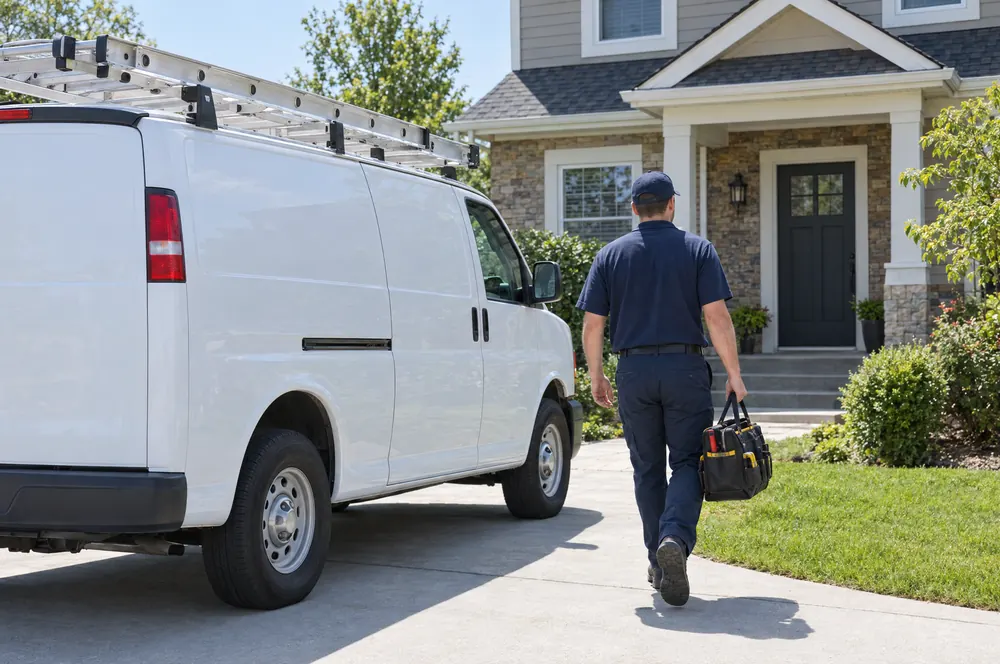
An HVAC service van is a rolling parts room that spends the day double-parked in driveways and alleys. Commercial auto handles two jobs for it. Liability coverage pays for injuries and property damage your vehicle causes to other people. Physical damage coverage, if you buy collision and comprehensive, pays to repair or replace your own van after a crash, theft, hail or fire.
Personal auto policies are priced for commuting and errands, and many of them limit or exclude business use. A van titled to the company, lettered with your logo and driven by your techs belongs on a commercial policy.
The build-out counts too. The standard business auto form pays for loss to a covered auto "or its equipment." Progressive Commercial says a commercial auto policy covers permanently attached gear such as ladder racks and built-in toolboxes. Bolted-down shelving, bin systems and drawer units generally fit that description.
Anything a tech can lift out is a different matter. Manifolds, recovery machines, vacuum pumps, loose ladders and the parts on the shelves usually need HVAC tools and equipment insurance.
| Usually covered | Usually not covered |
|---|---|
| Injuries and damage your van or truck causes to other people and their property | Gauges, recovery machines and other loose gear inside the van |
| Repairs to your own vehicle after a crash, if you carry collision | Injuries to your own techs (that's workers' comp) |
| Theft, fire, hail and vandalism to the vehicle, if you carry comprehensive | Repairs to a tech's personal car, even with hired and non-owned auto |
| Ladder racks, shelving and bins permanently bolted to the vehicle | A customer's new condenser riding in the truck (that's an installation floater) |
| The company's liability when techs drive their own cars or rentals for work (HNOA) | Parts inventory and refrigerant stock |
Example scenarios from HVAC fleets
These are fictional. Real outcomes depend on the policy wording, the driver list and the facts.
Example scenario: the on-call van on a Saturday
A shop lets its on-call tech keep a van at home so he can run after-hours calls. On a Saturday, his brother-in-law borrows it to haul a couch and backs it through a neighbor's fence. Whether the policy responds can depend on who was allowed to drive, whether personal use was permitted and what the application said. That's why we ask about take-home use, family drivers and where each van parks overnight.
Example scenario: the comfort advisor's own SUV
A comfort advisor drives her own SUV to an in-home estimate and clips a motorcycle while turning left across traffic. The rider sues her and the company. Her personal policy is usually first in line for her. Hired and non-owned auto (HNOA) can defend the company's share of the claim, but it won't repair her SUV.
Example scenario: black ice and a full build-out
A service van with about $9,000 in shelving, drawers and a ladder rack slides on black ice into a bridge rail and is totaled. If the policy values the van without its upfit, the check may cover the vehicle and leave much of the build-out on you. Tell us the upfit cost when we quote, and ask whether the policy pays actual cash value or a stated amount.
Hauling refrigerant cylinders: the federal basics
Auto limits and what drives your premium
Your liability limit is usually the number a contract tests first. One California city's 2026 trade-services agreement, for example, asks contractors for $2 million in auto liability. When a GC or property manager wants more than your auto policy carries, an umbrella policy can stack higher limits above it.
On the physical damage side, you choose collision and comprehensive deductibles per vehicle. A higher deductible lowers the premium, but it's money out of pocket after every fender-bender in a crowded supply house lot.
Price comes from the vehicles, the drivers and where they run. Progressive Commercial reports that contractors averaged about $260 a month per vehicle on new 2025 policies with no driver violations, for liability and physical damage combined. That's one carrier's average across trades, not an HVAC quote.
What you pay depends on your payroll by class code, your annual revenue, your mix of installation and service work, residential versus commercial jobs, the vans you run, your claims history and the limits you pick.
For auto, three details in that list carry extra weight: how many vehicles you run and how heavy they are, the driving records of everyone you list, and whether vans go home with techs at night.
HVAC businesses that need commercial auto most
- Residential service and replacement shops run the biggest fleets for their size, and take-home vans for after-hours calls are common. See residential HVAC insurance.
- Commercial mechanical contractors add box trucks and trailers for larger equipment, and their subcontracts often set auto limits and ask for a waiver of subrogation. See commercial HVAC insurance.
- Independent techs who use a personal pickup for paid calls should check how their personal policy treats business use before the first crash, not after. See insurance for independent HVAC techs.
Auto requirements by state
States set the minimum auto coverage for every registered vehicle, and a few add rules that land on HVAC fleets:
- Michigan is a no-fault state. Every vehicle that must be registered there needs personal protection insurance (PIP), property protection and residual liability, and policies issued or renewed after July 1, 2020 must pick a PIP medical level. That structure shapes what a Michigan fleet pays. See Michigan HVAC insurance.
- Pennsylvania contractors working in Philadelphia need a city Contractor License, which asks for $300,000 in auto liability alongside general liability and comp. More on the Pennsylvania page.
- Florida lets a locally registered air conditioning contractor work anywhere in a declared natural-emergency area for 24 months after the emergency ends. Storm recovery can send your vans far from home, so tell us when vehicles travel or park away from your shop. See the Florida page.
For every other state, start with our state-by-state pages.
Related coverage
HVAC commercial auto questions
Will my personal auto policy cover the truck I use for service calls?
What is hired and non-owned auto insurance?
Does commercial auto cover the gauges and recovery machine in my van?
Can my techs take company vans home?
How many refrigerant cylinders can I carry in a service van?
Ready to see what you'd pay?
Independent agents, 12+ A-rated carriers, and a licensed agent back to you within one business day.