
Home › Coverages › HVAC Tools & Equipment Insurance
Tools and equipment insurance for HVAC techs
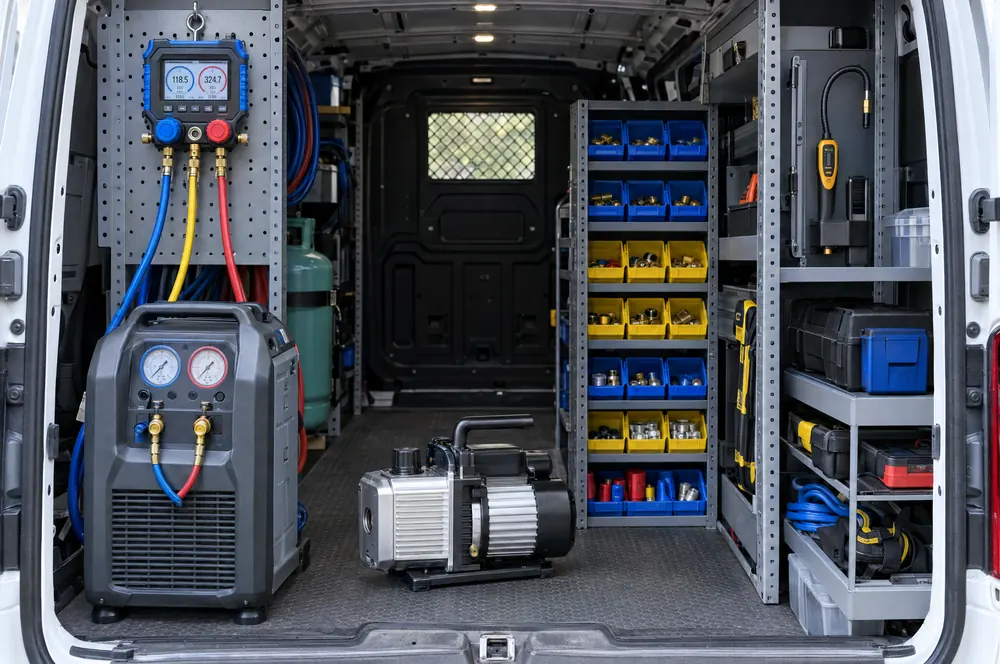
Contractors equipment insurance, often called a tools floater, pays to repair or replace your gauges, recovery machines, vacuum pumps, analyzers and brazing gear when they're stolen or damaged in the van, on a job or at the shop. It's separate from commercial auto, which covers the van itself, and from an installation floater, which covers the customer's new equipment.
- Since 2003
- 12+ A-rated carriers
- 28 states
- Independent agents
Start your HVAC insurance quote
Takes about two minutes. A licensed agent follows up.
Licensed in 28 states · NPN 7642818 · Since 2003
How contractors equipment insurance works for HVAC gear
A tools floater is a type of inland marine coverage. It follows your equipment from the shop shelf to the van to the job and pays to repair or replace covered items that are stolen or damaged along the way.
For an HVAC tech, that means the gear that makes a diagnosis or a repair possible:
- digital manifolds, probes and refrigerant scales
- micron gauges, vacuum pumps and recovery machines
- leak detectors and combustion analyzers
- brazing rigs, nitrogen regulators and press tools
- duct and sheet metal hand tools, crimpers and shears
Floaters usually handle gear in two ways. Smaller tools are covered as a group under one blanket limit, with a cap on any single item. Pricier pieces, like a combustion analyzer or a full press tool kit, get their own line and a stated value. That's called scheduling. One large online insurance marketplace says anything above $2,500 may have to be scheduled.
The standard AAIS contractors' equipment form can also cover equipment that belongs to others while it's in your care, when it's on your schedule or a schedule on file. Rental reimbursement, where included, helps pay for a replacement while your own covered gear is in the shop.
The floater doesn't replace two other policies. Commercial auto for HVAC vans covers the vehicle and the racks bolted into it. An installation floater covers the condenser or furnace you're putting in for a customer, not the tools you install it with.
| Usually covered | Usually not covered |
|---|---|
| Theft from a locked van, if you meet the policy's theft conditions | Gear that just goes missing, with no evidence of what happened |
| Drops, falls, fire and crash damage to covered tools | Wear and tear, and on some floaters, electrical damage to electrical gear other than lightning |
| Scheduled items at the value you listed | The customer's new equipment you're installing |
| Rented or borrowed equipment in your care, if the policy includes it | The van and its bolted-in shelving |
| Rental costs while covered gear is repaired, if you have rental reimbursement | Copper, equipment and parts stock sitting at your shop |
Example scenarios for HVAC tools claims
These are fictional. Whether a real loss is paid depends on the floater's wording and the facts.
Example scenario: the analyzer that left the roof
A tech sets a combustion analyzer on a parapet while he checks the gas valve on a rooftop unit. A gust tips the case over the edge, and it lands in the parking lot below. A floater that covers accidental damage would typically pay to repair or replace it, minus the deductible. If the analyzer was worth more than the per-item cap on your blanket limit and wasn't scheduled, you'd absorb the difference.
Example scenario: a punched lock in an apartment lot
A tech parks the company van outside his apartment overnight. By morning, the rear door lock has been punched out, and the recovery machine, vacuum pump, nitrogen regulator and a case of probes are gone. The damaged lock is visible evidence of forced entry, which many floaters ask for. If the policy also requires vans to be garaged after a set hour, the claim could still be disputed.
Example scenario: the rented material lift
A shop rents a material lift to raise a horizontal furnace to a garage ceiling. The lift tips on a sloped slab and bends its mast, and the rental yard bills the shop for the repair. If your floater covers equipment of others in your care, it may respond. If not, the damage waiver offered at the rental counter was the other option, so compare the two before you sign.
Van break-ins and the theft rules in your floater
Limits, deductibles and the gear you should schedule
Set the blanket limit to what it would cost to replace everything in a typical van, not what you paid years ago. Then schedule the pieces that would blow past the per-item cap. Ask whether the floater pays replacement cost or actual cash value, because a five-year-old recovery machine is worth far less on paper than a new one costs.
The deductible is a trade-off. A higher one lowers the premium, but it means smaller losses, like one stolen manifold, stay on your books.
What HVAC tools coverage costs
Two online sources publish tools figures for HVAC businesses. Treat them as rough markers.
| Source | What it reports |
|---|---|
| One online insurer, its HVAC customers (page dated October 2026) | About $32 a month on average; most customers pay $32 to $65 a month, with blanket equipment limits of $3,000 to $5,000 |
| One online insurance marketplace, its HVAC customers (updated August 2026) | $25 a month ($295 a year), listed as the median for policies bought July to December 2024 |
A shop running several vans of gear will usually need limits well above those.
What you pay depends on your payroll by class code, your annual revenue, your mix of installation and service work, residential versus commercial jobs, the vans you run, your claims history and the limits you pick.
Who needs HVAC tools coverage most
- Independent techs. Your gauges and recovery machine are your income. If they're gone, so is next week's work. See insurance for independent HVAC technicians.
- Refrigeration techs. Electronic leak detectors, large recovery machines and specialty tools for walk-ins and reach-ins add up quickly. See refrigeration contractor insurance.
- Residential shops with fleets. Every van is a separate pile of gear parked at a different address each night. See residential HVAC insurance.
Tools coverage and state requirements
State and local licensing rules usually focus on liability insurance, bonds and workers' comp. We haven't seen tools coverage on a state HVAC license checklist, so it's a business decision, not a filing. Our HVAC license requirements guide and the state pages show what your license does ask for.
One federal rule ties straight to your gear. EPA's Section 608 rules require technicians to recover refrigerant with certified recovery equipment before opening a system. A stolen or broken recovery machine can stall refrigerant work until it's replaced, which is where rental reimbursement earns its place. Our EPA 608 guide for HVAC owners covers the rest.
Related coverage
HVAC tools insurance questions
Are tools stolen out of a work van covered by insurance?
Do I have to list every tool on my policy?
Does a tools floater cover equipment I rent?
What isn't covered by contractors equipment insurance?
Is the new condenser I'm installing covered by my tools policy?
Ready to see what you'd pay?
Independent agents, 12+ A-rated carriers, and a licensed agent back to you within one business day.